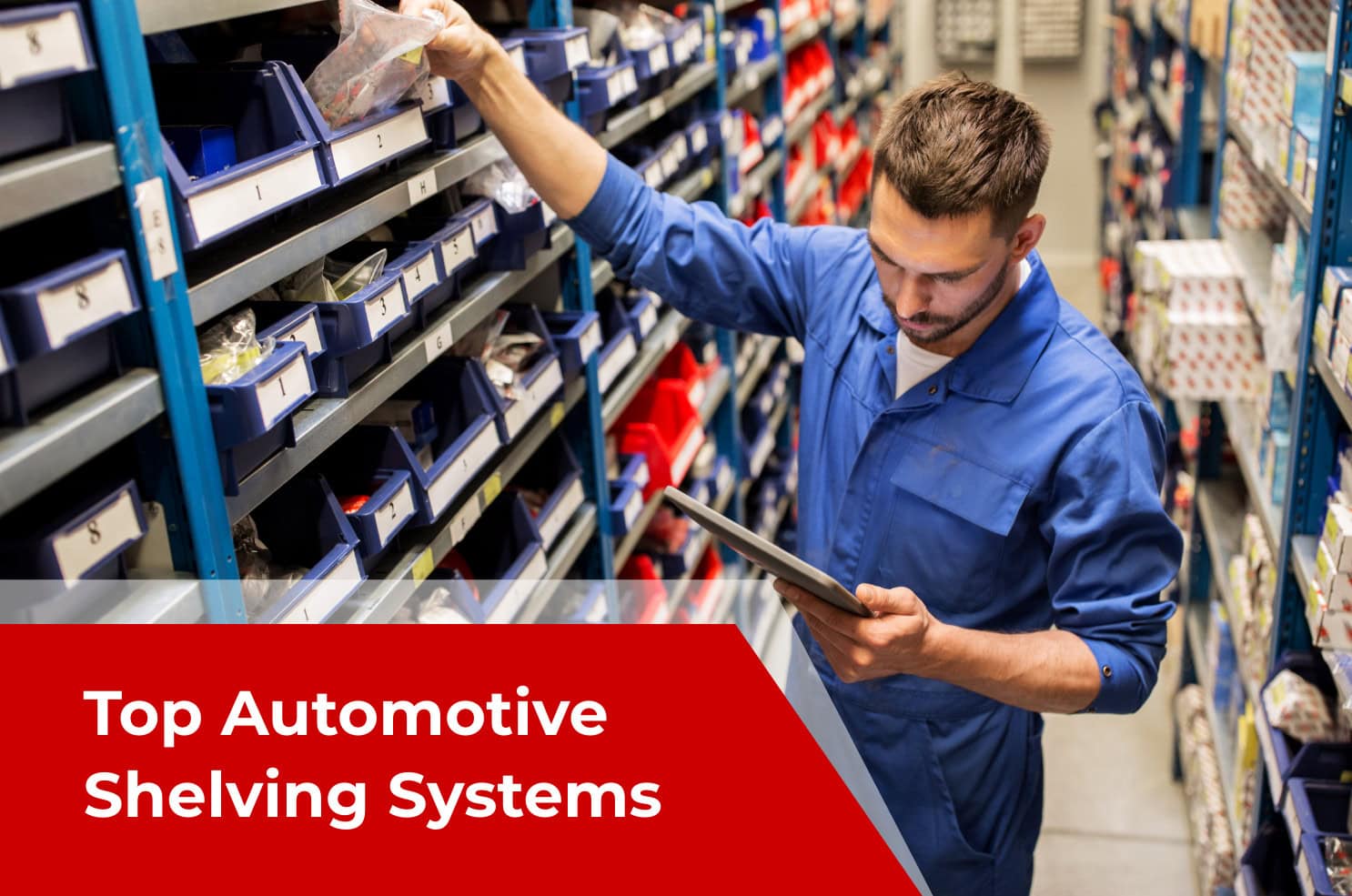
Top Automotive Shelving Systems for Storing Tires, Engines, and Large Components
Tires, engines, and oversized automotive parts can be very challenging to store, so you need racks that can handle the weight without buckling, and you need to be able to access everything without having to move several pallets just to grab one thing.
We’ve spent decades helping facilities find the right automotive storage solutions to balance load capacity, available floor space, and quick access. Because if that balance is even slightly off, it puts you at risk for damaged inventory, workplace injuries, and lost time.
Challenges in Automotive Storage
Weight is the most obvious issue because overloading shelves makes them prone to collapse sooner or later.
Size is another big issue. Things like exhaust systems, bumpers, and axle assemblies don’t fit on standard shelves. If you don’t use shelving that’s designed for these kinds of dimensions, you’ll end up leaning parts against walls and blocking aisles.
Heavy-Duty Shelving Solutions
Heavy parts require heavy-duty shelving, so start with load ratings. SRS has maximum-strength boltless shelving that can withstand extra-heavy loads.
If you’ve got bulky items, you can put them on wide-span shelving because it has an open design that lets you adjust beam placement every two inches. So, one bay can hold small alternators while the next stores full transmissions. This way, you don’t have to buy separate shelving systems.
Tire and Engine Storage Tips
SRS tire storage solutions use horizontal beams to cradle tire sidewalls without compression, so your tires stay vertical and don’t get flat spots. Set them up at waist level so your team doesn’t have to bend over numerous times per shift.
Engines need their own setup, so use engine storage racks with solid steel decking instead of wire mesh. Their flat surface distributes weight evenly and keeps oil from dripping onto the shelves or the floor below.
Pallet Racks vs Vertical Shelving
If you’re using forklifts to move your inventory, then you’re best off with pallet racks. With SRS selective pallet racking, you get direct access to every pallet position. Plus, load capacities meet industrial standards, and you can adjust heights in two-inch increments.
Drive-in racking is ideal for high-volume single SKUs for various reasons:
- It stores up to six pallets deep.
- It maximizes density for identical tire sets.
- It uses last-in, first-out access.
- It reduces aisle requirements by 40%.
Vertical shelving works better for hand-picked items. SRS automotive shelving with bin systems can hold thousands of small parts in less than 100 square feet. You get better visibility than pallet racks, and you don’t need a forklift.
Think about how you plan to pick your inventory. If you’re using forklifts, pallet systems are the right solution, but manual picking means you need shelving that’s easy to reach. Of course, you can always use both: Pallet racks for bulk storage and vertical shelving in active picking zones.
Large Component Storage Recommendations
Cantilever racks handle more awkward items like exhaust systems, body panels, and anything that’s too long for standard bays. Their arm design lets you slide parts in from the front without vertical obstructions getting in the way.
For really heavy components like truck axles, structural pallet racking works better than roll-formed systems. The Material Handling Institute points out that properly installed structural racks can support massive loads per beam pair without deflection.
Mobile shelving for bulky parts is a smart idea if you have seasonal inventory. It gets rid of aisles until you need them and gives you back 30 to 40 percent of your floor space. It mounts on track systems so you can move it easily, and it is perfect for large items like body panels and trim pieces.
Safety and Accessibility Considerations
OSHA requires floor-mounted anchoring for racks over 10 feet tall, but we recommend it for any automotive storage solutions that hold parts above head level. Use expansion bolts that are rated for your concrete thickness.
Install column protectors around corners where you operate forklifts. It’s a modest investment that prevents expensive and dangerous rack collapses.
Safety best practices for garage shelving systems include:
- Keeping heavy items on the bottom two levels
- Marking load limits clearly on every beam
- Adding wire mesh backing for small parts
- Making 12-foot aisles for forklifts
- Using 6-foot aisles for order pickers
Store engines and tire pallets closer to the ground, and use upper levels for lighter components like air filters and hoses.
Plan aisle widths around your equipment by actually measuring your forklifts and order pickers before you finalize your layouts. You can use our CAD layout services to plan setups that match your workflow and equipment before installation.
Ready to Upgrade Your Automotive Storage?
You need systems built for the loads you actually handle. Contact us for a free layout consultation or to discuss your specific storage challenges with SRS.
FAQ
Which shelving is best for heavy automotive parts?
Heavy-duty shelving with reinforced posts and solid steel decking works best. Look for systems with high load ratings per shelf level. SRS industrial steel shelving and structural pallet racks can both handle engine blocks, transmissions, and other high-weight components without deflection.
Can vertical shelving hold tires safely?
Yes, as long as it’s designed correctly. Vertical shelving for tires should use horizontal beams that support sidewalls without compression. SRS tire storage solutions include adjustable heights so you can separate different tire sizes and prevent flat spots.
Are pallet racks adjustable?
Most pallet racks adjust in two-inch increments, with beams that hook into slots on the upright posts, letting you reconfigure heights as inventory changes. SRS selective pallet racking systems give you the most flexibility to mix load heights in the same bay.
What is the best way to maximize space in automotive storage?
Use vertical space first. Stack shelving to ceiling height whenever it’s safe. Consider drive-in racking for high-volume SKUs to eliminate wasted aisle space. Mobile shelving for bulky parts eliminates fixed aisles and can give you back 30 to 40% of floor space.
How to maintain heavy-duty shelving?
Inspect beam connections, bent posts, and floor anchor integrity every month and replace damaged components immediately. Clean debris from shelves to prevent corrosion. Train staff to report any impacts from forklifts or loading equipment so you can assess damage before it causes failure.